Introduction
Mindleech is a fictional project for a university design course, exploring media addiction, digital manipulation, and visual storytelling. The campaign raises awareness of compulsive social media use and how platforms exploit dopamine-driven engagement loops to keep users hooked.
By using dystopian aesthetics, strong visual metaphors, and interactive elements, Mindleech makes these hidden mechanisms visible. The project follows a structured three-phase approach, combining striking 3D visuals, social media strategy, and user engagement to provoke reflection and encourage behavioral change.
This project challenged me both technically and personally, pushing my skills in Blender and Photoshop, while also prompting a deeper reflection on my own media habits and the need for conscious digital consumption.
Concept & Visual Identity
Mindleech uses a dystopian aesthetic to emphasize the theme of control and addiction. The logo—a fusion of an octopus and a brain—symbolizes entanglement and mental enslavement by digital platforms.
The color palette consists of deep blues, dark purples, and striking reds, reinforcing the sense of urgency and psychological manipulation. The typography is bold, minimalistic, and slightly unsettling, mirroring the campaign’s thought-provoking nature.

Key Visuals & Metaphors
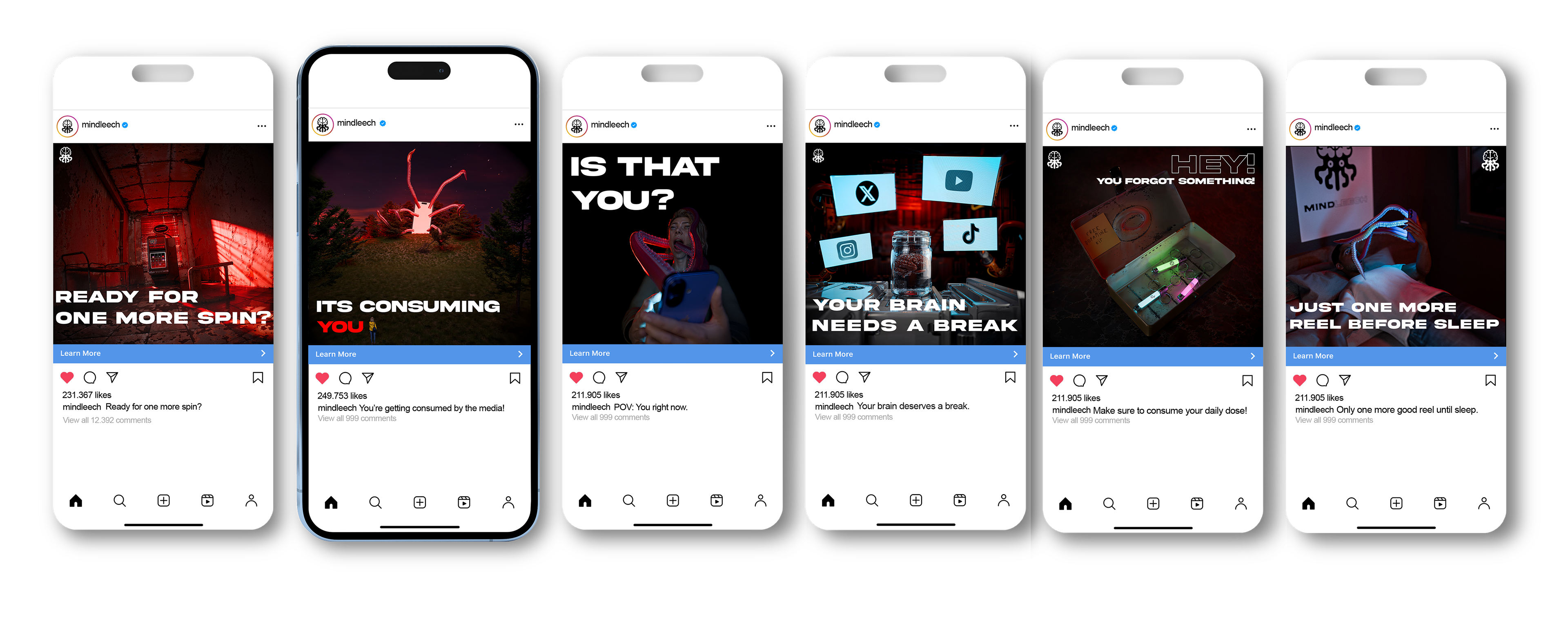
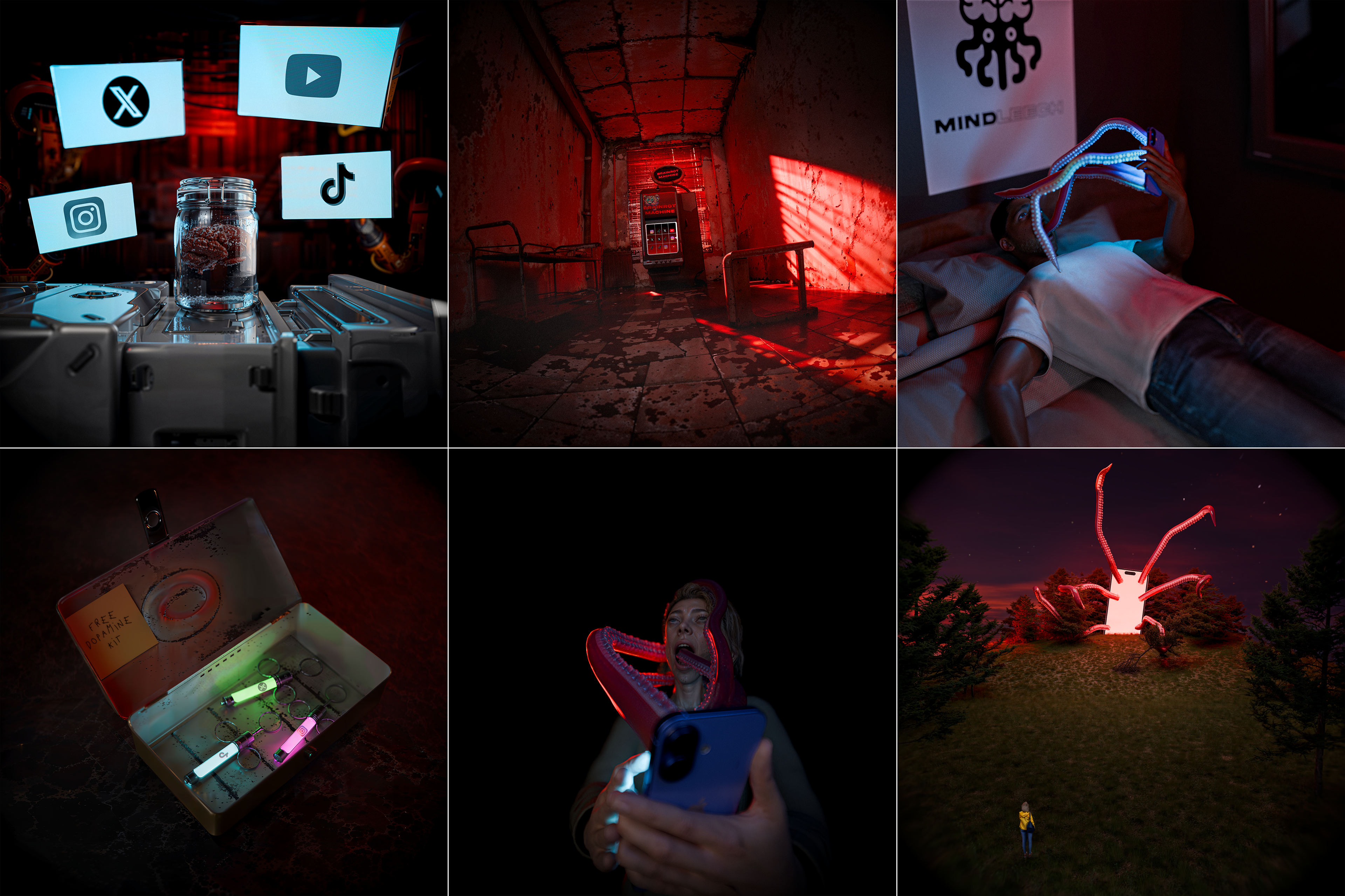
Mindleech features six photorealistic 3D visuals, each representing a different aspect of media addiction. Created in Blender, these images are designed to be both unsettling and thought-provoking. The visuals include a smartphone with tentacles consuming everything in its path, a human brain trapped in a glass container bombarded by social media notifications, and a slot machine metaphorically representing the unpredictable dopamine hits of scrolling. Other images explore the impact of social media on mental health, sleep disruption, and cognitive overload. Each image is paired with short, direct statements that confront the viewer, provoking reflection on their own digital behavior.
Social Media Strategy
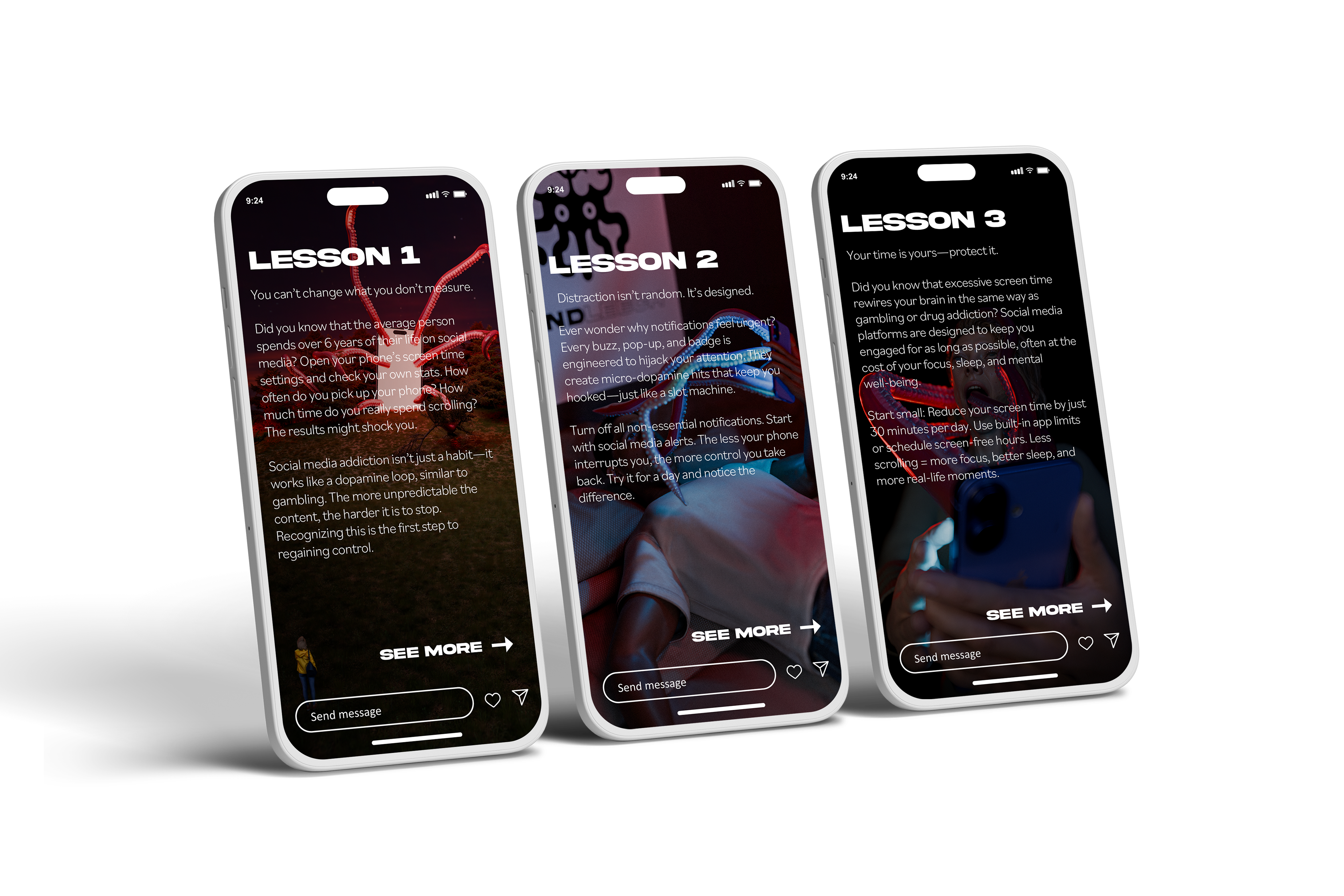
Mindleech is designed to exist within the platforms it critiques. The campaign is embedded inside social media, reaching users in the very moment they are caught in compulsive scrolling. Instagram ads are strategically placed to disrupt the flow of engagement and prompt users to reflect on their habits. Interactive Instagram stories provide bite-sized lessons on digital detox, screen-time tracking, and habit-breaking techniques.